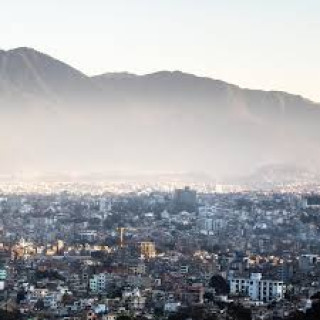
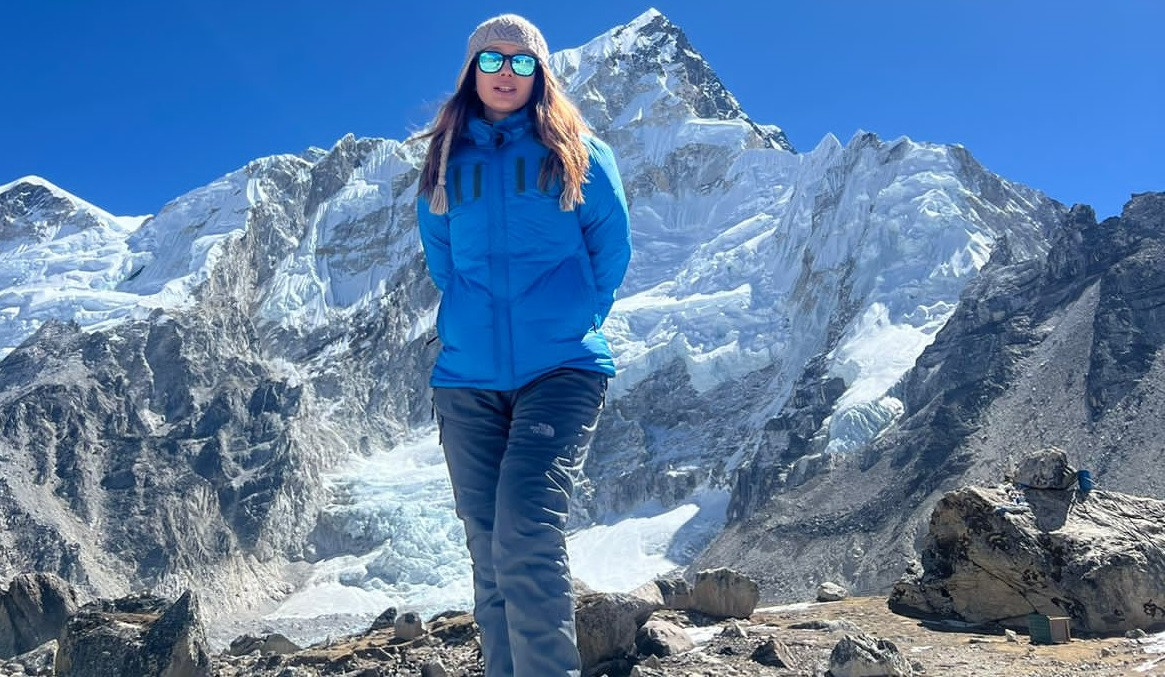
Burrowed in the midst of gigantic and imposed Himalayas, Everest Base Camp stands as a buoy of human adventure and sharply delineated alert call for action in alteration of climate.
As a Nurse, I recently had the chance; that is to break the odyssey to esteemed point of disembarkation, where I spotted intense knock-on environmental deterioration on health of communities along with ecosystem of world’s towering peaks.
Our journey to Everest Base Camp was not solely a venture; but a vision and mission to realize the linkage between an eco-friendly environment and health, to uphold significant measures to attenuate the cataclysmic consequences of atmospheric swap on the Himalayas.
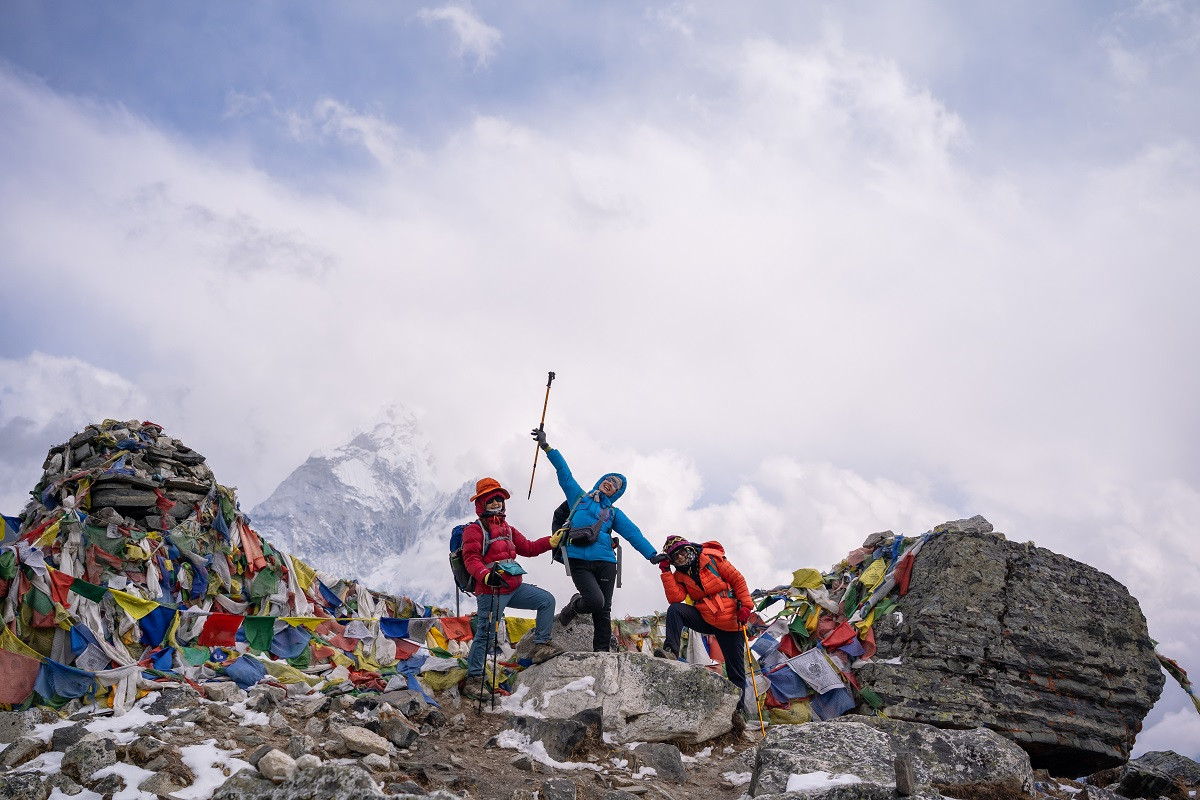
Accompanied by SathSathai and environmental activists, we embark a glow in challenges on environment that the region has gone through and put upon an influencing deed to jolt them.
As we footslog through the jagged topography, our terrain was distinct by an alert of induced climate change, be it shifting weathers, withdraw of glaciers, trespassing the warning of natural calamities. All these changes have a wide-ranging interference on the well-being and health of local communities which has hyped the illness related to respiratory related diseases and directly shoot up susceptibility to vector borne disease and water borne disease in regard to contamination.

As a Nurse I was peculiarly enervated to health action of climate change in Solu Khumbu, the Everest Region. The thawing of glaciers not only endangers the waterworks of the community but also poses dangers for disasters like floods and landslides, which could destroy houses and villages and may also play havoc with health-seeking behaviors, along with the availability of healthcare services.
The increasing temperature has been directly proportional to vector-borne diseases like dengue and malaria, causing more strain on delicate healthcare systems. Despite of challenges, We have expectations - the hope in the perseverance of human will and a strength of determined step to create positive impact.
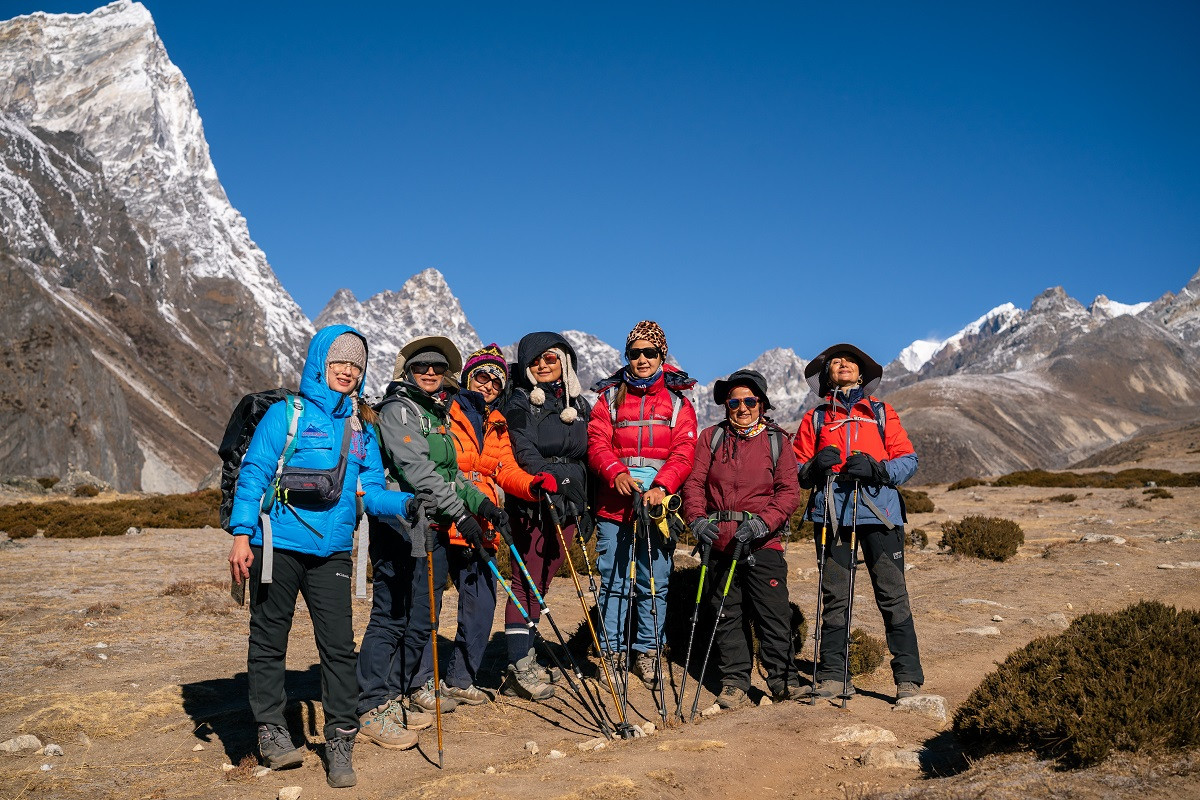
We conducted a short program at Syangboche peaked at 3780 meters particularly aiming at women empowerment for taking action in climate change where the women from Aama Samuha and focal person of community were present and we engaged them to freehold efforts to conserve environment and develop continual and unceasing practices to diminish negative impact to change in health and wellbeing and the most astonishing part was their commitment and will to show their presence in the program as they walked for four hours in such thrilling snowing weather to put their words in the program.
Something that act as a spur to expedition was when we observed the liability and responsibility of the Sherpa community to mount the natural heritage and bottle in holy mountain. Approaches like waste management programs, reforestation, and efforts to reduce carbon emissions function to preserve the environment for future generations.
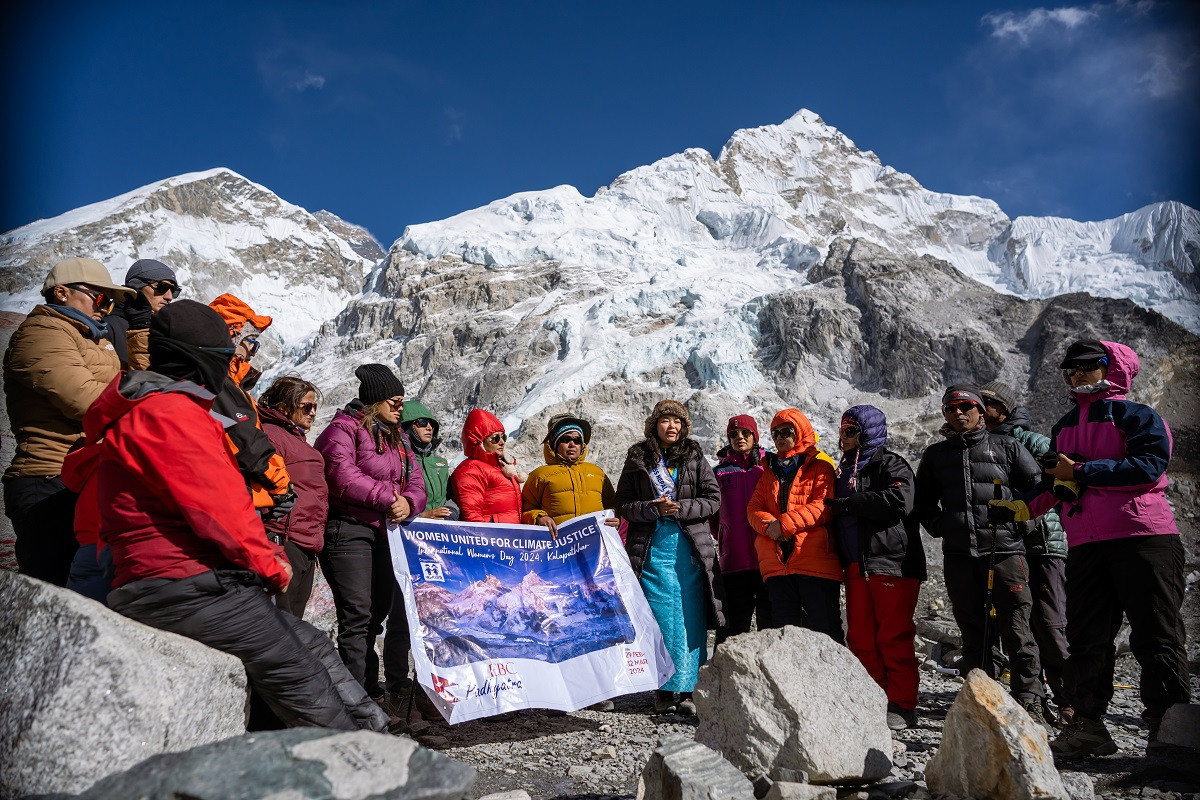
As our expedition drew to a close, I left Everest Base Camp with a renewed sense of motivation and purpose to continually combat climate change, both as a Nurse and as a Citizen.
My acquaintance with SathSathai has bolstered my belief in the importance of collective action to outturn constructive changes. Ultimately, our trek was not merely to reach the destination, it was molding operation; operation to restore earth and set the seal on for gleaming future of all people.