
United Nations Secretary-General Antonio Guterres, standing at the base of Mount Everest, delivered a crucial message, stating, "The era of fossil fuels must come to an end." Just a week following his proclamation, Nepal welcomed the introduction of a hydrogen-powered car, signaling the dawn of the end of the fossil fuel era.
On November 9, 2023, Hyundai's Nexo Fuel Cell Hydrogen SUV made its debut at Kathmandu University (KU) with support from the Nepal Oil Corporation. This groundbreaking event was orchestrated by the Green Hydrogen Lab at Kathmandu University, a research institution dedicated to exploring hydrogen energy under the leadership of Professor Dr. Biraj Singh Thapa.
Professor Dr. Thapa emphasized the significance of introducing hydrogen vehicles as a national asset, serving to advance the cause of hydrogen energy and vehicle marketing. He stressed that categorizing hydrogen as an energy source in Nepal was a necessity to propel the development of hydrogen energy, vehicle usage in industry, and potential exportation. Importantly, he anticipated that the government would address the legal complexities surrounding the introduction of hydrogen vehicles following the import of this car.
He further underscored that promoting hydrogen vehicles would bolster Nepal's claims to the "Loss and Damage Fund" given its minimal contribution to climate change. Professor Dr. Thapa urged the government to formulate a straightforward policy for the adoption of hydrogen cars and the reduction of diesel and petrol vehicle usage.
He highlighted the role of government authorities, lawmakers, law enforcement agencies, investors, and other stakeholders in explaining the significance and benefits of hydrogen vehicles and increasing their utilization.
Professor Dr. Thapa also called for the government to officially recognize hydrogen as an energy source, assign vehicle number plates to hydrogen cars, and establish legislation governing long-distance hydrogen vehicle operation.
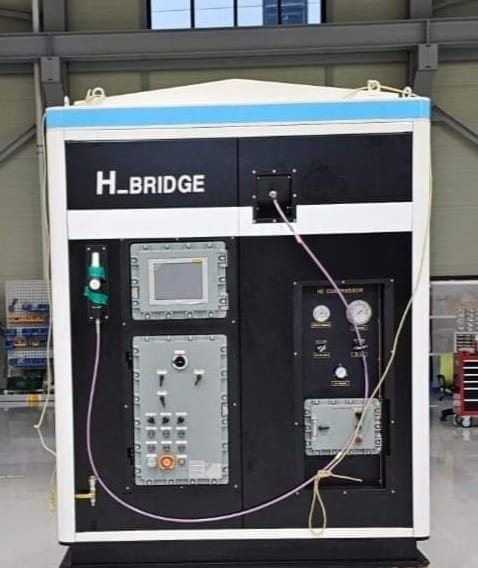
Engineer Narayan Shrestha from the Development Assistance and Regional Branch of the Ministry of Energy reported that the government was in the final stages of drafting a hydrogen energy policy. He revealed that the policy's development involved discussions with key stakeholders, and it had been submitted to the Cabinet for approval.
The Planning Commission's input was awaited before presenting the policy for implementation. This policy was expected to facilitate the creation of additional regulations, promote the use of hydrogen-powered vehicles, enable fertilizer production, and contribute to a cleaner environment. Shrestha noted the government's commitment to reducing diesel and petrol vehicle usage and anticipated that the gradual phasing out of fossil fuels was imminent.
Shrestha acknowledged that while the initial production of pure hydrogen was costly, it would become more affordable as Nepal increased its electricity generation capacity. Prime Minister Pushpa Kamal Dahal Prachanda's expressed interest in driving a hydrogen car further highlighted the importance of introducing hydrogen vehicles in Nepal.
Professor Dr. Thapa recognized the challenges associated with bringing hydrogen vehicles to the market, including regulatory and administrative hurdles, but expressed hope that the introduction of this hydrogen car would raise awareness and attention to the cause.
In Nepal, investments of approximately NPR 1.5 billion could facilitate the introduction of hydrogen cars and buses and the establishment of hydrogen refueling stations. Professor Dr. Thapa envisioned that by acting as a guide in this field, Nepal could secure a share of the hydrogen energy market, contributing to the nation's economy.
Future of Hydrogen Car
The Hyundai Nexo Fuel Cell, which Professor Dr. Thapa regarded as a national asset, provided an opportunity for all citizens to experience driving a hydrogen vehicle.
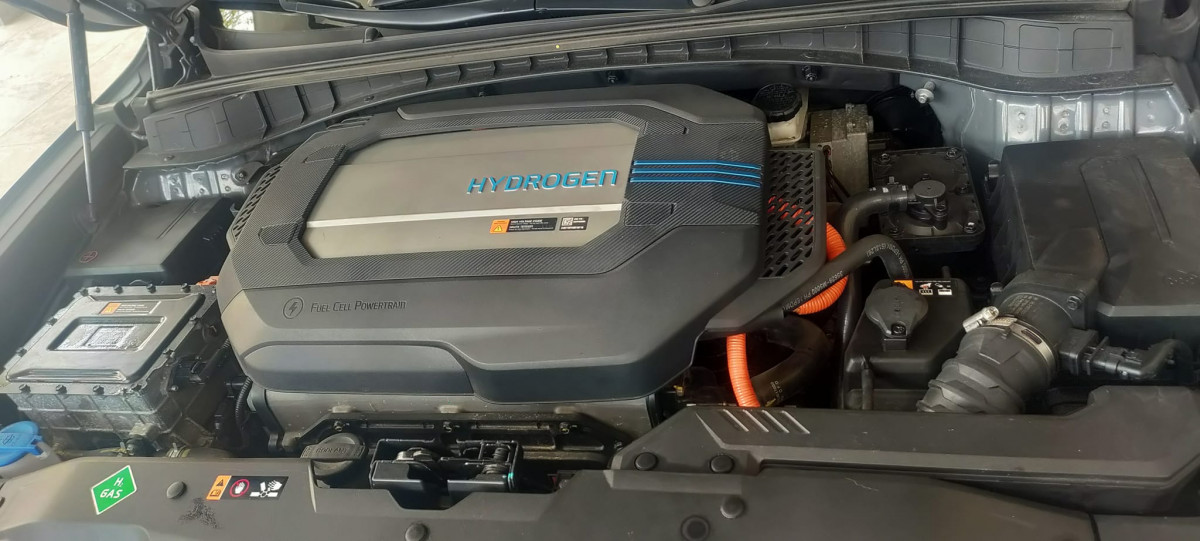
According to Hyundai's official website, the Nexo Fuel Cell is priced at USD 60,130, equivalent to over NPR 79 lakh. The vehicle, boasting 161 horsepower, offers a range of 380 miles on a full hydrogen tank of 6.33 kg, powered by a 120 kW motor.
Additionally, a 1.56 kW lithium-ion battery provides support during high and low voltage conditions. The vehicle generates electricity through the reaction between hydrogen and oxygen, emitting only water as its byproduct, thus making it an environmentally friendly alternative to conventional petrol-powered vehicles.
In the global effort to combat climate change and reduce greenhouse gas emissions, hydrogen vehicles have emerged as a promising alternative alongside electric vehicles. World leaders face mounting pressure to phase out fossil fuels, and hydrogen as a clean energy source has gained traction.
The International Energy Agency (IEA) projected a growing demand for hydrogen, reaching 94 megatons in 2021. In 2022, Europe relied on hydrogen for less than 2 percent of its total energy, with 96 percent produced through impure methods or from carbon dioxide-emitting natural gas. The European Union (EU) aims to produce 10 million tons of clean hydrogen by 2030.
The United States Department of Energy has set an ambitious goal of producing one million tons of pure hydrogen by 2030, as current production methods remain impure. China has outlined extensive plans for hydrogen development by 2035, targeting 50,000 hydrogen cars and 100,000 to 200,000 tons of pure hydrogen by 2025.
Japan, with a current hydrogen market of approximately 20 million tons, aims to increase production to 3 million tons by 2030 and 20 million tons by 2050, along with the introduction of 200,000 hydrogen cars and 320 hydrogen refueling stations by 2025.