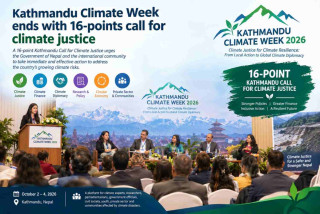
KATHMANDU: Nepal has been demanding climate finance, international cooperation and compensation for climate-related loss and damage. However, experts say weak internal preparedness, limited access to climate finance, poor local-level capacity and inadequate international advocacy are weakening the country’s climate justice claims.
Nepal’s Third Nationally Determined Contribution (NDC) estimates a need for US$75–90 billion by 2035, while the National Adaptation Plan (NAP) estimates a need for US$47 billion between 2021 and 2050. However, Nepal’s access to international climate finance remains very limited compared to these needs.
Climate Resilience Expert Deepak KC said Nepal’s challenge is not only securing funds but also accessing and effectively using them. He noted that strict requirements for project preparation, safeguards and monitoring make international climate finance difficult and time-consuming to access.
“It took about seven years to bring US$36.1 million from the Green Climate Fund, and there is a lack of technical expertise within the country,” KC said.
Climate and Disaster Management Expert Dr. Samjhana Bisht said climate justice must begin with affected communities. She stressed that local people need access to information and meaningful participation in decisions affecting their lives.
Meanwhile, Climate Adaptation Expert Dr. Bimal Raj Regmi said Nepal has failed to make the Himalayan climate crisis a strong and consistent agenda in international negotiations. He called for more strategic and regular climate diplomacy.
Arjun Bhattarai, Chairperson of the Federation of Nepalese NGOs, said climate justice should be treated as a national issue rather than the agenda of a particular government or political party. He called for a common national position on climate finance, Himalayan conservation and loss and damage.
Climate Policy Expert Tungbhadra Rai also urged Nepal to clearly identify its flagship climate priorities and make greater use of civil society expertise in international negotiations.
Experts say stronger institutions, better local capacity, meaningful community participation and coordinated climate diplomacy are essential if Nepal is to turn its climate justice demands into effective international action.