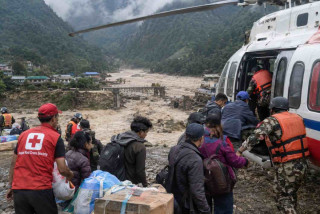
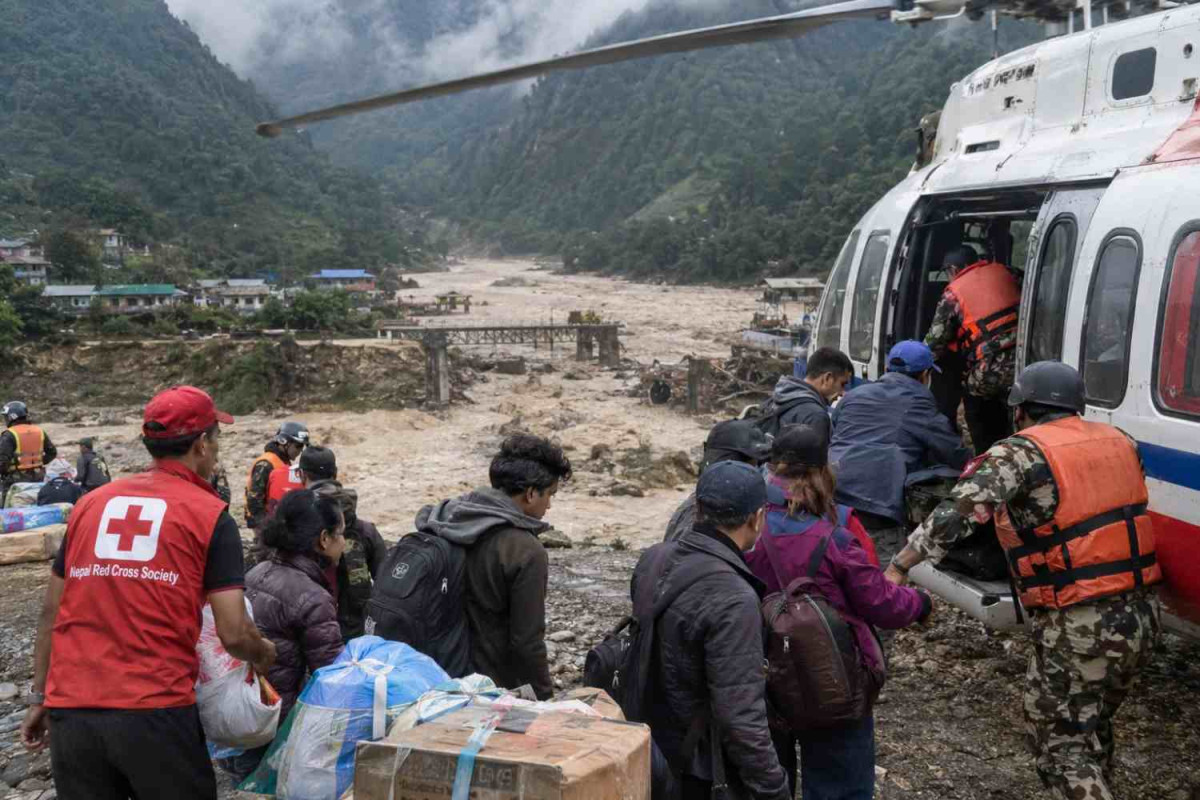
Gorkha, Nepal — A total of 1,044 people stranded in flood-affected areas of northern Gorkha have been rescued by helicopter over four days, from Sunday to Wednesday. Among those rescued were 70 foreign nationals, according to Assistant Chief District Officer Netra Prasad Sharma.
Several residents and tourists were stranded at different locations after the flood damaged roads, trekking trails and bridges connecting northern Gorkha. With road access disrupted, helicopters had to be deployed to bring them to safety, Sharma said.
According to him, 96 people were rescued on Sunday, 321 on Monday, 186 on Tuesday and 441 on Wednesday.
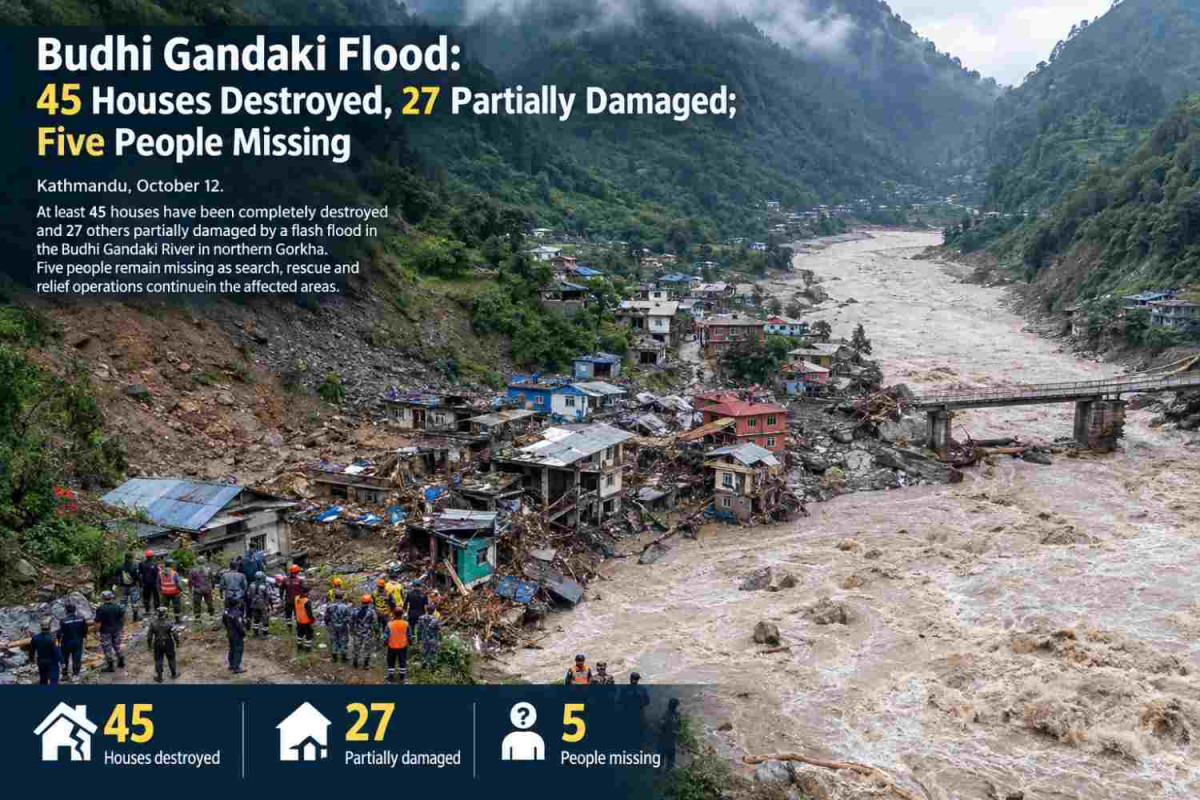
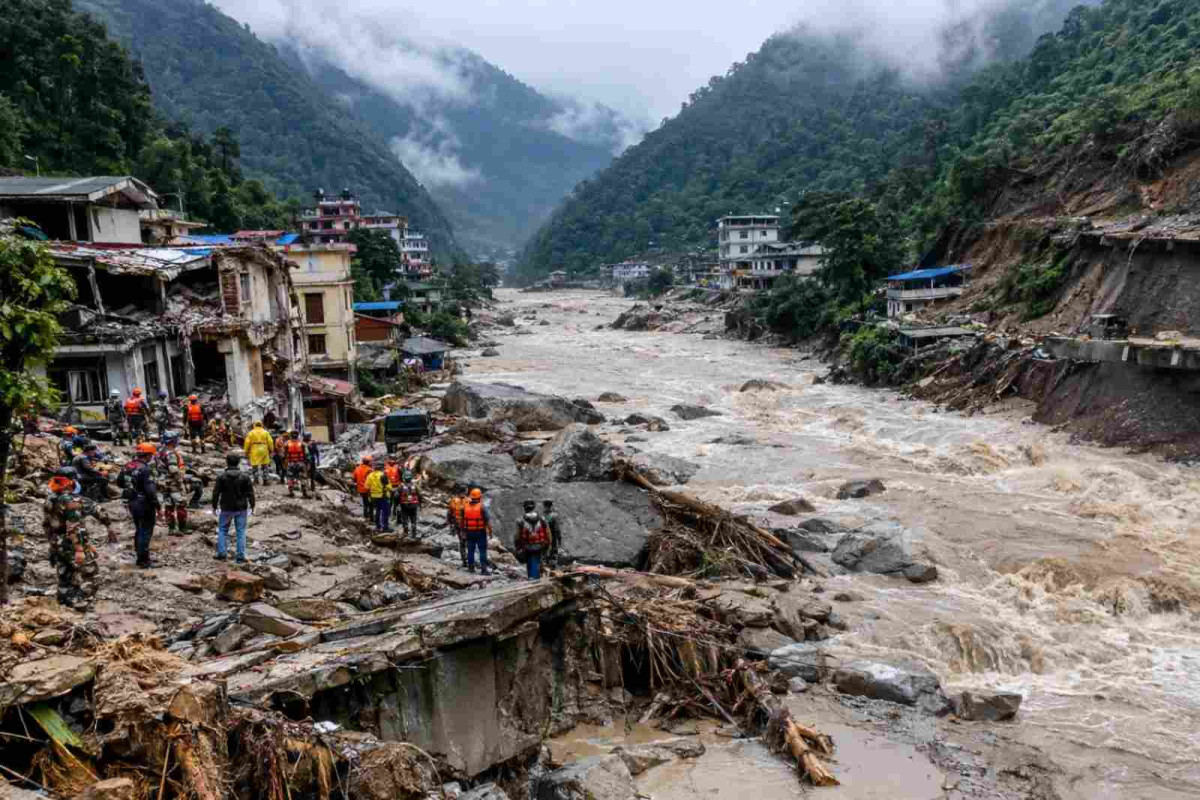
The flood has damaged settlements and disrupted daily life across northern Gorkha. Houses, suspension bridges, roads and other infrastructure have been affected in various areas of Chumnubri and Dharche rural municipalities. According to a preliminary assessment by the Nepal Red Cross Society, 174 households across four local levels in the district have been affected.
Relief Supplies Transported Alongside Rescue Operations
Helicopters are also being used to deliver relief supplies to affected settlements as roads and trekking trails remain blocked. Food supplies, tarpaulins, mats, blankets, pillows, solar equipment and generators have been transported to the affected areas, Sharma said.
“Helicopters are also being used to distribute relief materials. The helicopters flying from here to carry out rescue operations take relief supplies with them, and on their return, they bring people back to safety,” Sharma said.
Red Cross Intensifies Relief and Response Efforts
The Nepal Red Cross Society has intensified relief distribution, damage assessments and humanitarian assistance in flood-affected areas.
According to Rishi Khanal, Secretary General of the Nepal Red Cross Society, volunteers from Gorkha, Dhading, Tanahun, Chitwan, Nawalparasi East and Nawalparasi West were mobilised as soon as information about the flood was received. They have been helping provide early warnings to communities at risk and supporting emergency response operations.
In coordination with the National Disaster Risk Reduction and Management Authority and the Nepal Army, the Red Cross has sent non-food relief items, including tarpaulins, mattresses, blankets and dignity kits, to affected areas. Two large tents suitable for operating hospitals have also been delivered, Khanal said.
“Expert personnel have already been deployed to assess the damage, and additional essential non-food relief supplies are being sent today in coordination with the government. Volunteers are fully engaged in delivering humanitarian services to affected communities,” Khanal said.
Access Challenges Continue in Affected Areas
Damaged roads and bridges continue to make it difficult to reach flood-affected settlements. In these challenging conditions, rescue operations, the transportation of relief supplies and the identification of affected families’ immediate needs remain key priorities.