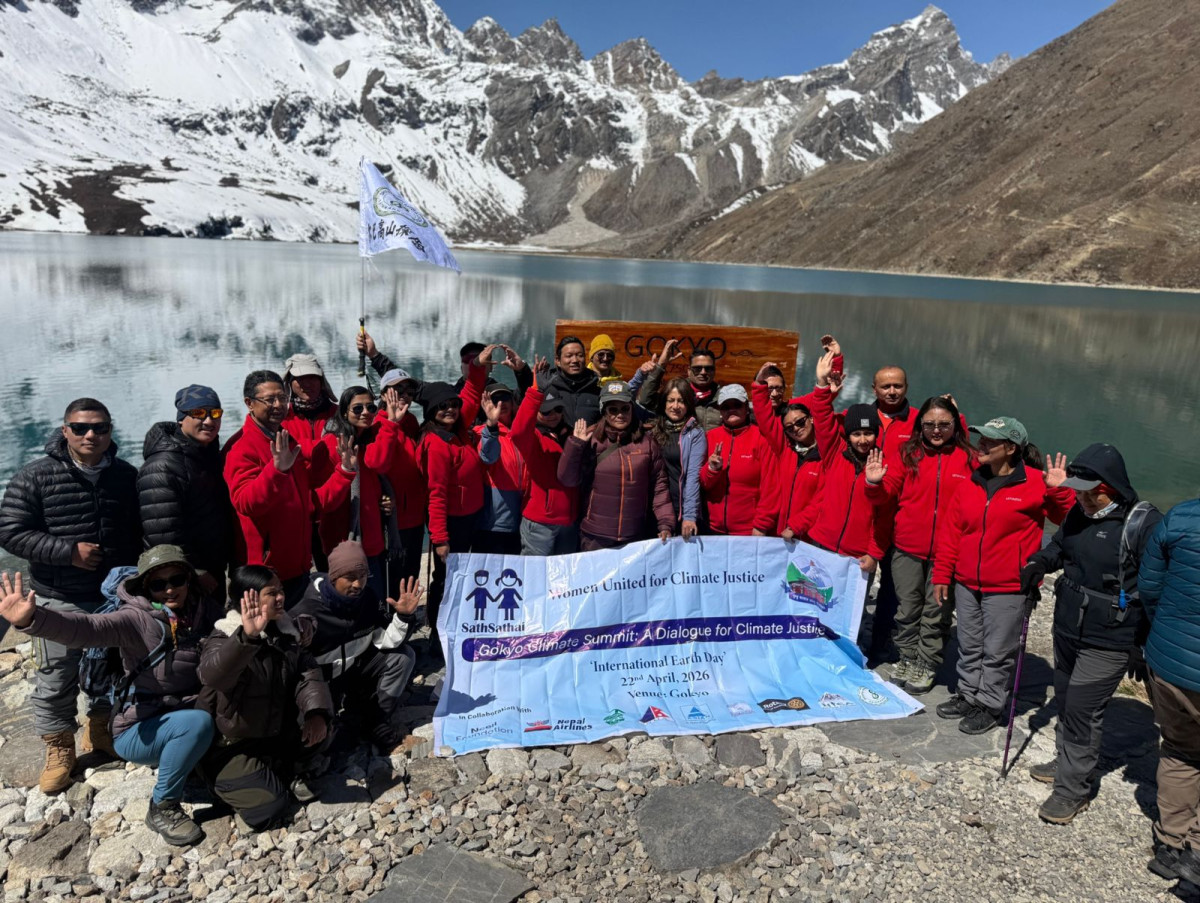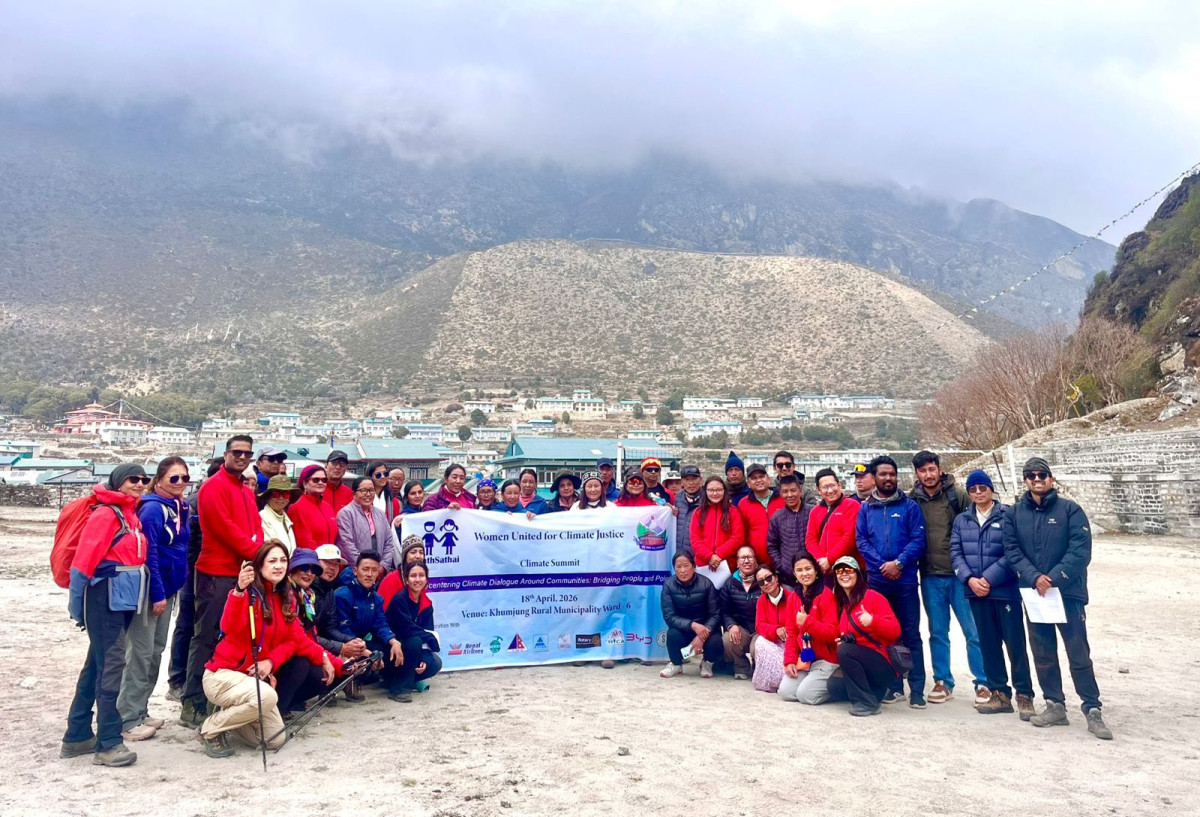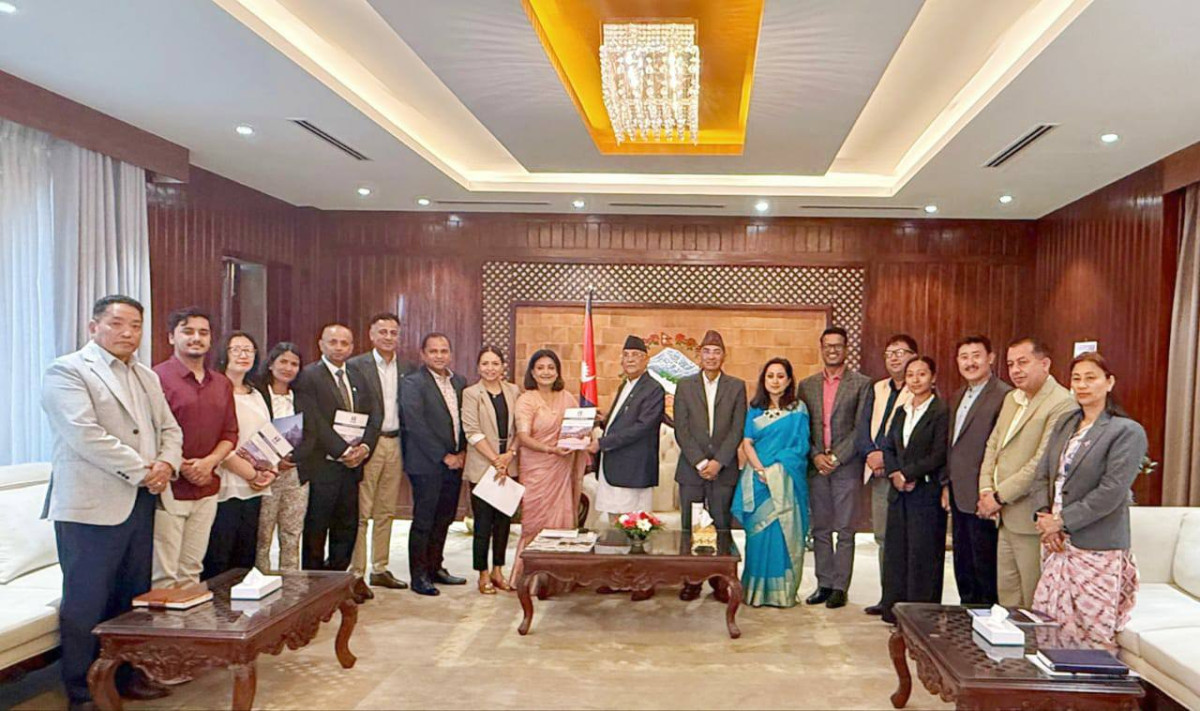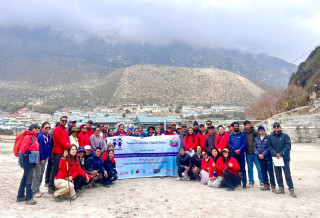
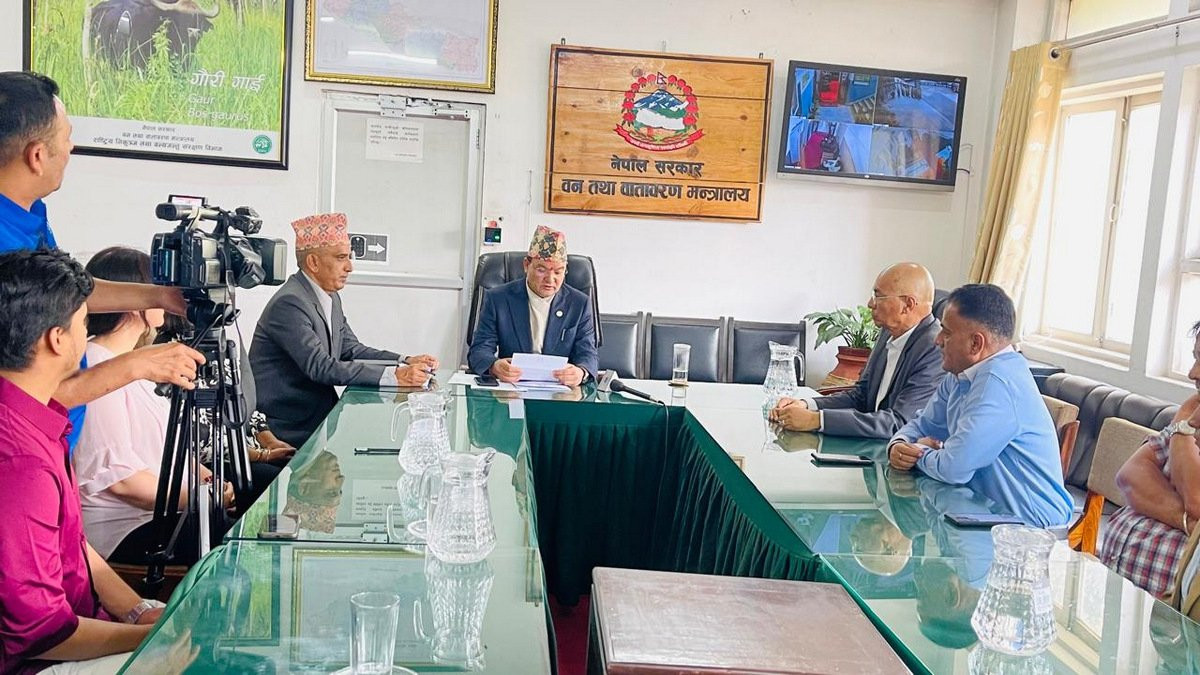
Kathmandu— In a pivotal moment for grassroots climate advocacy, the official report from the "Summiteers’ Summit: A Dialogue for Climate Justice"—held in the flood-affected village of Thame, Solukhumbu—was formally submitted to the Ministry of Forest and Environment on May 13.
The comprehensive report, crafted as a key prelude to the upcoming Sagarmatha Sambaad, was handed over to Hon. Minister for Forest and Environment, Mr. Ain Bahadur Shahi Thakuri, and Secretary Mr. Rajendra Prasad Mishra. Representing the summit's organizing body, Ms. Prajeeta Karki, Chairperson of SathSathai Foundation, presented the Summiteers’ Declaration, a document that captures the lived realities and urgent demands of mountain communities facing the frontlines of climate change.
Held on April 22, 2025, in the scenic yet climate-vulnerable village of Thame, the summit brought together women mountaineers, local leaders, and environmental advocates to spotlight the challenges faced in high-altitude regions due to escalating climate-induced disasters.
Minister Thakuri lauded the initiative as “a crucial bridge between local voices and global climate discourse,” noting that the insights and recommendations from the Thame declaration will directly inform discussions at Sagarmatha Sambaad 2025, taking place in Kathmandu from May 16 to 18. “It is essential that dialogues like these strengthen our collective understanding—from the Himalayas to the Tarai—to build a truly resilient Nepal,” the Minister said.
He also highlighted the growing international recognition of grassroots movements in Nepal, citing the Karnali Conclave Declaration, also led by SathSathai Foundation, which was acknowledged at COP29 in Azerbaijan. He affirmed that the voices from Thame would receive similar integration at this year’s Sagarmatha Sambaad, reinforcing Nepal’s commitment to community-informed climate policymaking.
Commending the Thame summit for its timeliness and authenticity, Minister Thakuri emphasized the importance of listening to those “who live with the mountains and bear witness to their rapid transformation.” He reiterated the government’s dedication to uplifting such grounded efforts within national and international policy platforms.
As Nepal prepares to host its flagship global climate forum, the Sagarmatha Sambaad stands as a beacon of inclusive dialogue, committed to elevating the experiences of frontline communities—particularly those living in high-altitude and vulnerable regions. The declaration from Thame is now set to become a vital piece in shaping the summit’s agenda and vision for a just and resilient future.