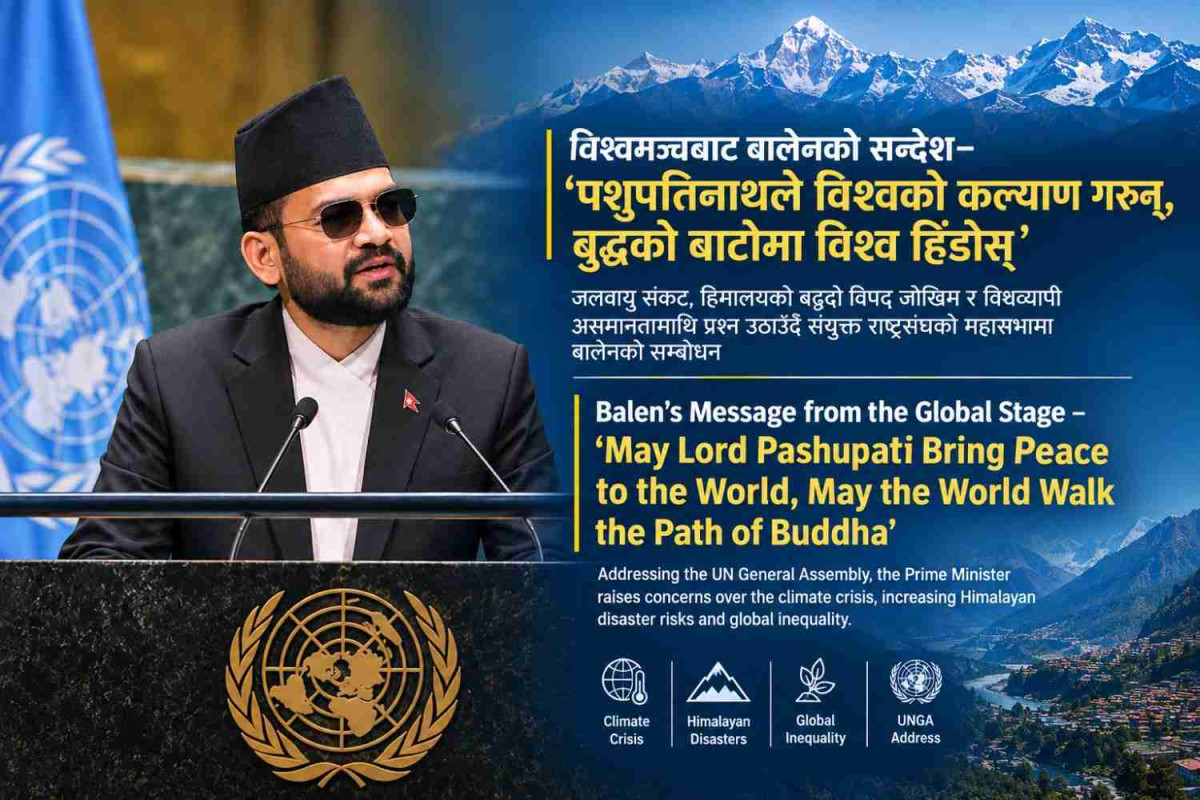
New York, September 25— Prime Minister Balendra Shah ended his address to the 81st session of the United Nations General Assembly with a distinctly Nepali message of peace and human welfare, saying, “May Lord Pashupatinath bless the world. May the world follow the path shown by Buddha.”
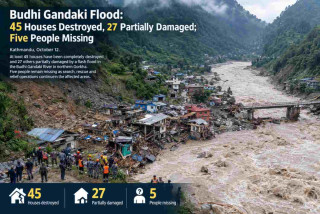
The closing message came after Shah used his first address to the UN General Assembly to draw international attention to Nepal’s climate vulnerability, the devastating Bhotekoshi-Trishuli floods and the growing risks facing the Himalayan region.
Speaking from the world stage in New York, Shah described the recent floods as more than a national disaster, calling them a warning to the international community about the consequences of a warming climate.
“I come before you from Nepal — a distant country in the Himalayas — carrying a close warning for humanity,” Shah said at the beginning of his address.
‘The warning from the rooftop of the world was not heard loudly enough’
Shah recalled United Nations Secretary-General António Guterres’ visit to Nepal nearly three years ago, when Guterres warned about the accelerating climate crisis from the vicinity of Mount Everest.
According to Shah, that warning had not been translated into action at the speed and scale required by vulnerable communities.
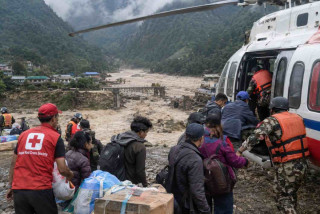
He linked the warning to the recent Bhotekoshi-Trishuli disaster, saying the catastrophe demonstrated how climate-related risks are becoming increasingly severe in the Himalayan region.
Shah said Nepal had recorded at least 1,400 confirmed deaths and more than 6,000 people were still missing following the disaster. He said preliminary assessments indicated that the physical recovery needs could amount to around 10 percent of Nepal’s gross domestic product.
Climate change ‘does not recognize borders’
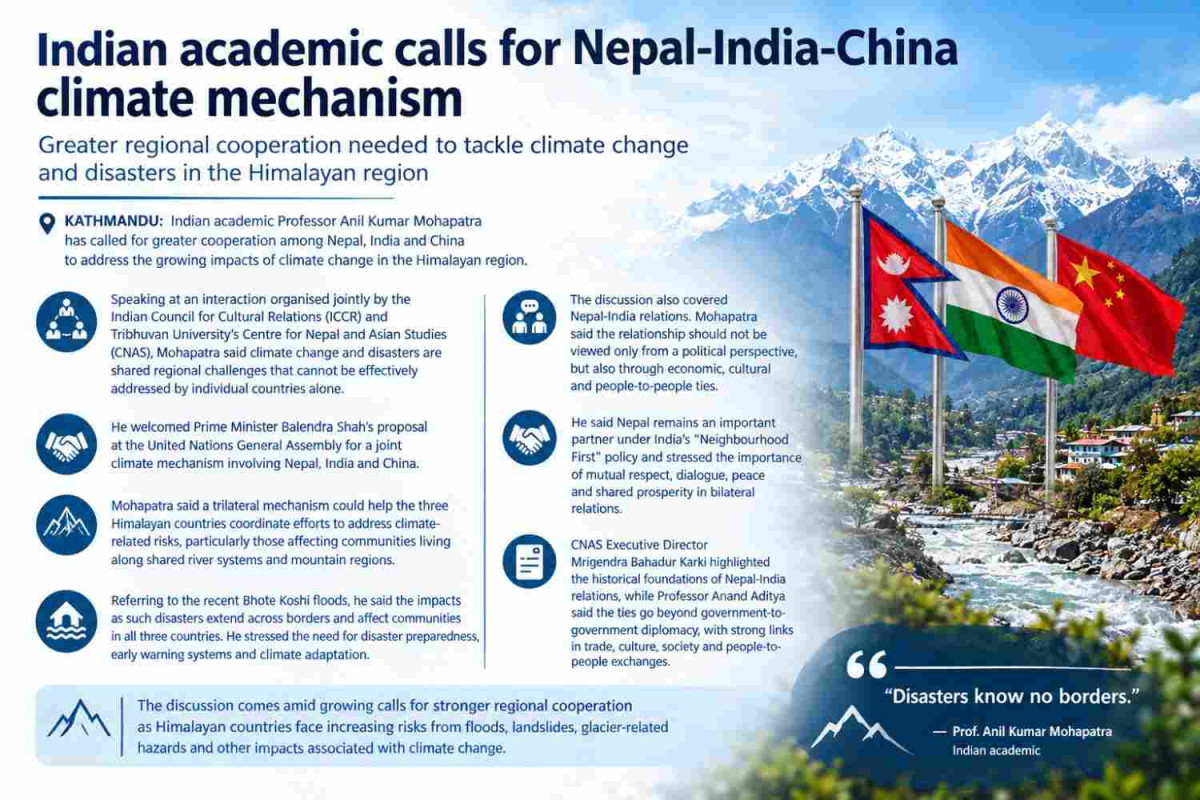
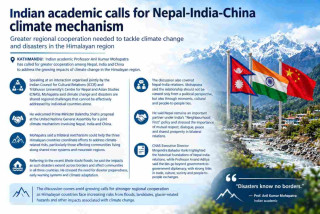
A major part of Shah’s address focused on the need for greater cooperation among Himalayan countries.
He said a warming climate was destabilising the fragile Himalayan ecosystem, with melting permafrost contributing to unstable mountain slopes and increasing the risks of ice-rock avalanches, floods and landslides.
The impacts, he said, extend across national boundaries.
“Climate change does not recognize borders,” Shah said, adding that glaciers and floods do not stop at political boundaries.
He proposed the creation of a Himalayan Climate Resilience Mechanism, led by Nepal, India and China. The proposed mechanism would facilitate the sharing of satellite data and technical expertise, monitoring of dangerous glacial lakes, stronger joint early-warning systems and coordinated disaster response.
“Let the Himalayas become a laboratory of international cooperation, rather than a frontier of fragmented information,” Shah said.
Nepal seeks greater climate support
Shah also highlighted Nepal’s relatively small contribution to global greenhouse-gas emissions.
He said Nepal contributes less than 0.1 percent of global greenhouse-gas emissions but is experiencing retreating glaciers, increasingly unstable mountain slopes and unpredictable rivers.
“We did not create this crisis. Yet we are paying a colossal price for it,” he said.
The prime minister called for greater international support for countries facing climate-related losses and damage. He said existing financing mechanisms, including the Loss and Damage Fund and the Global Environment Facility, remain inadequate.
He also argued that climate finance should be easier for vulnerable countries to access.
“Climate finance must not become a bureaucratic maze through which vulnerable countries spend years proving that they need help,” Shah said.
Six words: Relief, rehabilitation, reconstruction — responsibility, reparation, resilience
Shah summarised Nepal’s immediate climate-related demands in six words:
“Relief. Rehabilitation. Reconstruction. And also: Responsibility. Reparation. Resilience.”
He said the first three were necessary after disasters, while the latter three were needed to prevent climate disasters from becoming a permanent condition for vulnerable countries.
He called for grant-based international assistance rather than simply additional loans for countries already struggling with the consequences of climate disasters.
‘Flawless logistics for war and broken logistics for food’
Shah also broadened his address beyond climate change, questioning the priorities of the international system.
He contrasted the rapid movement of weapons and military supplies across borders with difficulties faced by ordinary people in obtaining essential goods such as fertiliser, bitumen and cooking fuel.
“We have built a world with flawless logistics for war and broken logistics for food,” Shah said.
He argued that countries such as Nepal and other South Asian nations were simultaneously dealing with climate impacts and the consequences of conflicts and geopolitical crises beyond their control.
Climate justice is also about who has a voice
Shah said climate justice should not be understood only in terms of financial assistance.
He described it as “distributive justice” — who bears the costs — and “procedural justice” — who has a voice.
He argued that the interests of mountain communities, small island states, landlocked and least-developed countries, as well as future generations, should receive greater consideration in global decision-making.
A message from Nepal to the world
Towards the end of his speech, Shah called for greater investment in climate resilience, insurance, innovation, stronger infrastructure and institutions, while urging countries to reduce dependence on fossil fuels.
He also called for stronger systems capable of warning communities and saving lives before disasters strike.
“When the next warning comes from the rooftop of the world,” Shah said, “let us be ready to hear it, and ready to act.”
He then ended his address not with another policy demand, but with a message rooted in Nepal’s religious and cultural traditions:
“May Lord Pashupatinath bless the world.
May the world follow the path shown by Buddha.”
“Dhanyabad, Namaste.”