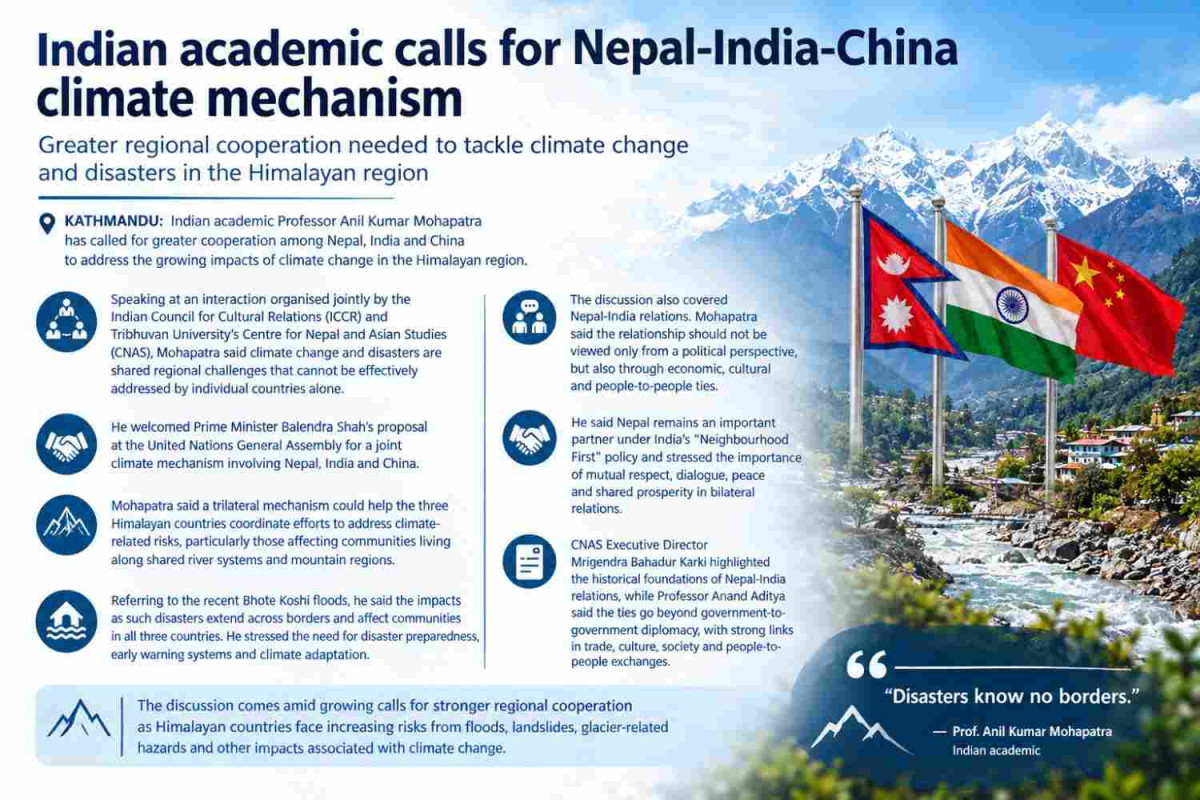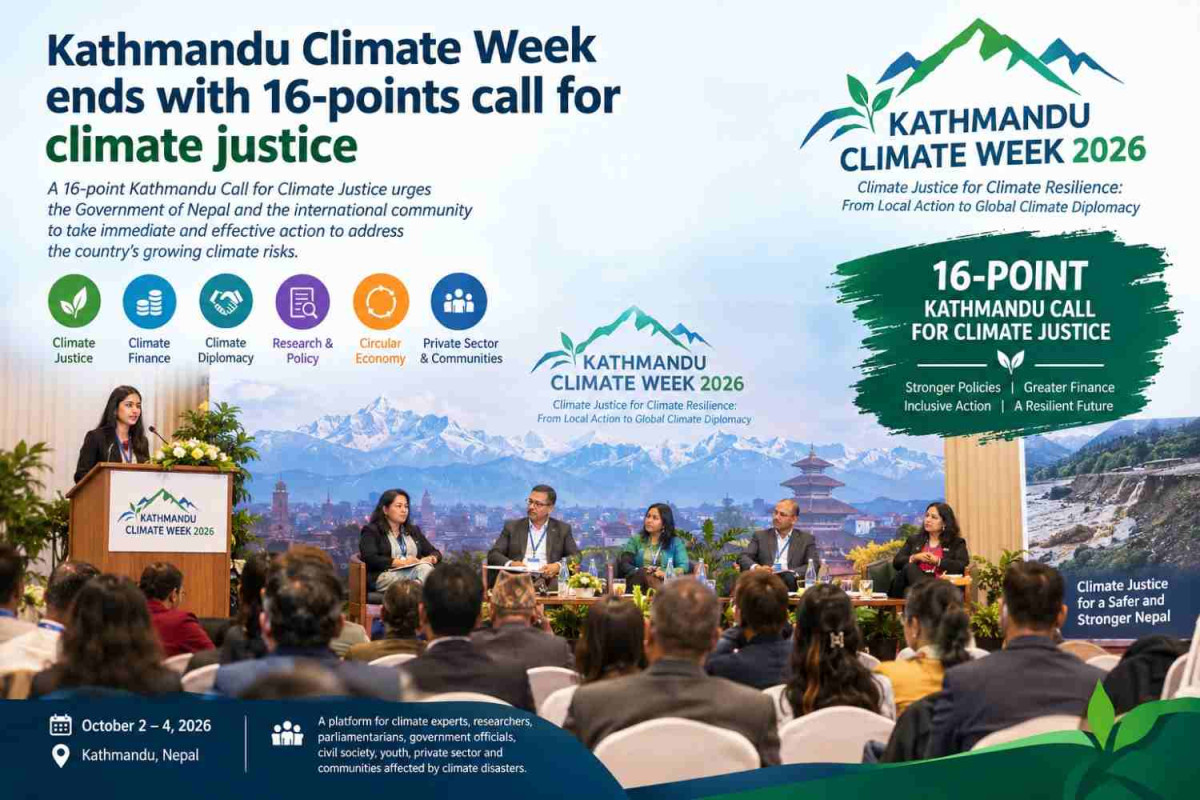

Prime Minister Pushpa Kamal Dahal Prachanda has reiterated Nepal's commitment to achieving 'net-zero' carbon emissions by the year 2045. Prime Minister Prachanda, who is in New York to participate in the 78th General Assembly of the United Nations, addressed the 'Climate Ambition Summit' held at the United Nations headquarters and reaffirmed Nepal's dedication to upholding the Paris Agreement.
The primary objective of the Paris Agreement is to restrict global warming to 1.5°C by eliminating carbon emissions from member countries. Previously, at COP-26 in Glasgow, Scotland, former Prime Minister Sher Bahadur Deuba had pledged that Nepal would attain the net-zero goal by 2045. Prime Minister Prachanda echoed this commitment during his address.
Prime Minister Prachanda also drew attention to the plight of Least Developed Countries (LDCs), which bear the brunt of climate change effects despite contributing only 3.3 percent of global carbon emissions. He proposed five initiatives for LDC countries to combat climate change effectively. Additionally, he emphasized the need for the efficient implementation of the Doha program and called for the extensive utilization of essential resources and technologies to address the worsening climate change situation.
In his speech, Prime Minister Prachanda advocated for a doubling of investments in the field of climate change by 2025 and urged the fulfillment of the promised 100 billion US dollars in climate change-related investments, which would benefit LDC countries significantly. Furthermore, he highlighted that 48 percent of the world's population lacks access to electricity and emphasized the importance of initiatives and support to achieve Goal 7 under the Sustainable Development Goals.
Looking ahead, Prime Minister Prachanda envisioned a critical review of climate change progress during COP-28 and stressed the importance of efforts to maintain the Earth's temperature below 1.5°C. He also set ambitious targets, aiming to cover 45 percent of Nepal's land with forests by 2030 and increase the country's current power generation capacity of 1,400 megawatts to 15,000 megawatts by the same year.