
Dr. Maheshwar Dhakal, the Joint Secretary of the Ministry of Forestry and Environment has been newly appointed as the alternate member of the Loss and Damage Fund. He has worked as the head of the climate change management division of the Ministry of Forestry and Environment and also as the head of the biodiversity and environment division. A simultaneous conversation with Dhakal about what is loss-loss and what countries like Nepal should do to claim the fund:
What is climate loss and damage?
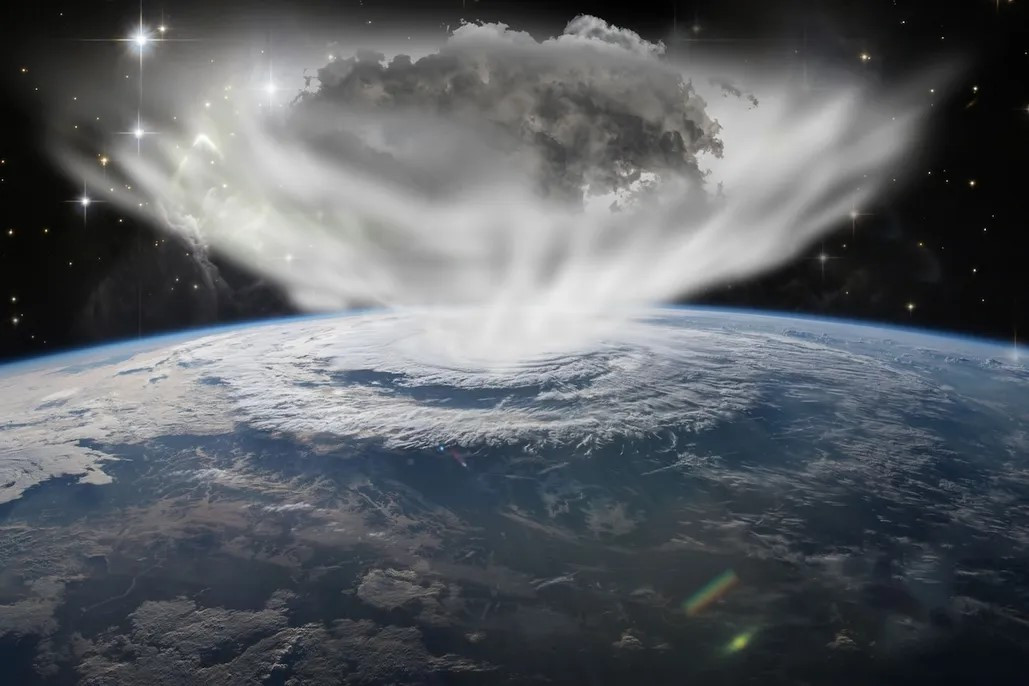
Damages caused by climate change is to be understood as climate loss and damage, and it is of two types. One type of climate loss and damage is compensable, and the other is non-compensable. The impacts of climate change are very high. It has increased the temperature of the earth, raised the sea level, melted the snow off the mountains, dried up the water sources, and after agricultural production started to decrease, the reasons were studied. The study concluded that due to human activities, the temperature of the earth has increased, and the emission of carbon and greenhouse gases has increased. Because of this, the time of rain started to vary, the amount of water started to vary, droughts were created when it rained less, and floods and landslides occurred when it rained more. This caused a huge loss of human wealth.
Its influence began to increase in mountainous countries like Nepal. For the past 15 years, climate change has been discussed in every corner. It took a long time to reach maturity. A rich man and a poor man must be viewed from the perspective of how much capacity he has to adapt or how much role he has played in carbon emissions to understand what the loss is. As of today, rich people and rich nations emit more carbon and have more adaptive capacity. In the case of poor people and poor countries, the contribution to carbon emissions is low, and adaptive capacity is weak. The recognition that they are more at risk and that we need to take special care to protect them is the subject of the harm-harm debate. For this, the Green Climate Fund (GSF) came, even with this, the matter of harm and loss could be addressed, and the issue of why a separate fund for harm and loss was needed was also raised. The Climate Change 'Loss and Damage' has been established under the belief that it should be looked at more broadly.
How do loss and damage funds work?
Based on the conclusion that climate damage should be considered separately in COP-27 from the discussions of the past decade and a half, the damage-loss fund was established. In COP-28 it has been agreed to operate a loss-loss fund. Some countries put up money and now more than 700 million US dollars have been collected. The Operational Lagos of the Fund established by COP-27 has been made into an instrument document (Fund Operational Standards) by COP-28.
A governing board has been formed for the operation of the loss-making fund. The board consists of 26 members, each of whom has an alternate member. The meeting of the members shall be held at least once in 6 months. That meeting makes its method, process, and criteria for how to provide the money in the fund to the countries most affected by the losses. For four years, its interim secretariat is to be located at the World Bank's headquarters in Washington, DC. After looking at the effectiveness of the work done by the Interim Secretariat in four years, it will be decided whether to continue it or find an alternative. The Secretariat does its internal procedures, how to bring money to the loss and damage fund and how to distribute the money brought in fairly. It is not the case that the method, statute and procedure of the fund created for the first time will be exactly the same. However, the documents prepared by the secretariat are approved by the board and further work is carried out by evaluating the report submitted in the annual report about the work done and approved.
What should Nepal do to get the benefits of the loss and damage fund?
How to monitor the damages caused by the climate, how to keep the data, and how many financial benefits will be received in the case of equal losses, and the claim process is still not done today. Establishing a loss-making fund has also become a subject of study for scientists and researchers. What are the economic indicators of losses, which losses are called direct and which are indirect has not been decided. An economic assessment of any loss requires reliable bases. After analyzing the factual data, after coming to the point that such an amount can be given for such loss and damage, then the board makes a decision and the amount is distributed. For this, standards and procedures for each stage are yet to be made. A mountainous and high-risk country like Nepal can claim that disaster events are climate-related events by preparing sufficient bases, and putting forward studies and reliable data. The lobbying we did for the establishment of an indemnity fund and the initiative we took to get board members is an achievement in itself. Now it is challenging for us to develop our data-keeping system and ability to present our loss claims to achieve more. For this, we have to do a lot of homework and hard work.
It has also been said that the process of loss and damage funds, like other funds, will be complicated. Do you think countries like Nepal will not be able to access it?
In COP-28 itself, issues have been raised that all countries should make the distribution of loss and damage fund transparent, focusing on countries and people who are at high risk, adopting an easy and simple process and should be fast. If the procedure adopted by the other funds in the past did not work, however, it was discussed that more victims should get quick relief from this fund. In principle, all suggestions are appreciated. However, it is also necessary to pay attention to the possible risks that may come in the name of fast delivery. A loss-making fund works by adopting the good practices of other climate funds in operation and learning from bad practices.
We have a one-door system of receiving foreign financial resources, that is, it comes through the Ministry of Finance. It is important to know how we are going to spend the loans and grants we have brought, and how we are working to distribute them at the central, provincial, and local levels. For this, the Ministry of Finance and the relevant ministries dealing with climate change should sit down and discuss the shortcomings so far and how to work in the future and go with a new 'departure'. We need to re-evaluate what we are doing. We can establish access by prioritizing and collecting reliable data through reliable mechanisms and analyzing the collected data. This requires our capacity building. On the one hand, we need to develop the capacity to discuss at the international level, while on the other hand, we need to develop the capacity to work within the country. We need to 'revisit' the capacity of government institutions.
What needs to be done to ensure that the most vulnerable communities benefit?
The main objective of the climate change 'Loss and Damage' fund is to prioritize the most vulnerable and affected communities. We saved 45 percent of our forests and increased the number of tigers, but the local community is suffering from it. Even when there are floods and landslides, the communities on the banks of the river are suffering. Because of that, if the most vulnerable and affected communities are not included in the priority of its funding, it will be a problem to get the funds. Therefore, for this certainty, the center should also go through a new vein by discussing with the local government and analyzing the weaknesses in the past. All three levels of government should be serious about its process being fair and transparent.