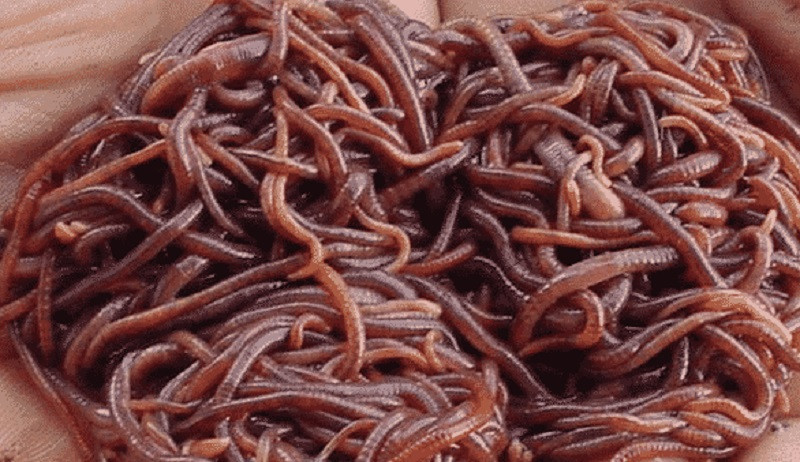
Ishwori Bhandari has to jump out of bed early in the morning everyday because the phone never stops ringing. The 50-year-old returnee migrant from Tilottama-2, Rupandehi raises earthworms and produces organic manure, and has a devoted fan following among farmers across Nepal.
The vermicompost which he makes using earthworms is an excellent fertiliser, while fish hatcheries, pet stores and poultry farmers buy the wriggly creatures to use as feed.
Bhandari spent several years in the Gulf and India as a migrant worker before returning to start something of his own. In 2013, he went into the marketing business but wasn't successful. He struggled for nearly seven years after that.
In 2020, he decided to enter the agricultural sector. "I invested Rs2 million to start a farm on two and a half bighas,” said Bhandari.
He started Green Zone Agro Farm and operated a nursery. “At the same time, I was doing research on the internet about producing organic manure using earthworms. After I thought I had learned enough, I began raising them.”
Bhandari also travelled to Chitwan to observe earthworm farming. Nowadays, he supplies organic manure and earthworms across the country. He produces earthworms in 15 plastic tunnels. He also makes vegetable seeds and maintains a large marigold farm.
"I sell earthworms for Rs1,000 per kg and organic manure for Rs35 per kg. There is huge market potential for earthworms and manure produced from them,” Bhandari said.
According to him, it costs Rs125,000 to build a sophisticated tunnel or greenhouse. "I have spent Rs3 million on my farm so far. I am trying to raise capital to expand my farm."
Bhandari collects cow and buffalo dung and weeds to rear earthworms.
Home and commercial vermicomposters buy earthworms. Studies have shown that vermicompost enhances plant growth, suppresses diseases and insects in plants, and increases microbial activity in the soil.
Vermicompost also improves water retention, aeration and porosity in soils. Agriculture students, researchers and farmers are frequent visitors to his farm. Bhandari says demand for his manure has grown, but he has not been able to fulfil all the orders he get.
"I am receiving tonnes of orders. Nowadays, I get orders from Rolpa too,” he said. "Demand for earthworms is huge, but I am not able to supply a fraction of it."
Chemical fertilisers play an important role in promoting farm production and income and ensuring national food security. However, overuse of chemical fertilisers has resulted in serious agricultural non-point source pollution.
In the last fiscal year, Nepal imported a record-high amount of chemical fertilisers worth Rs40 billion, a sharp rise from Rs10 billion in 2019. The high figure is mainly attributed to the rise in prices of fertilisers in the global market.
Experts say fertilisers should be applied in sufficient quantities and in balanced proportions—or there should be balanced use of chemical and organic fertilisers to keep the soil health intact.
Agricultural expert Tej Narayan Gaire says vermicompost is very effective for agriculture sustainability. "Nepal must take into account the potential of cultivating earthworms and encourage such farmers," he said.